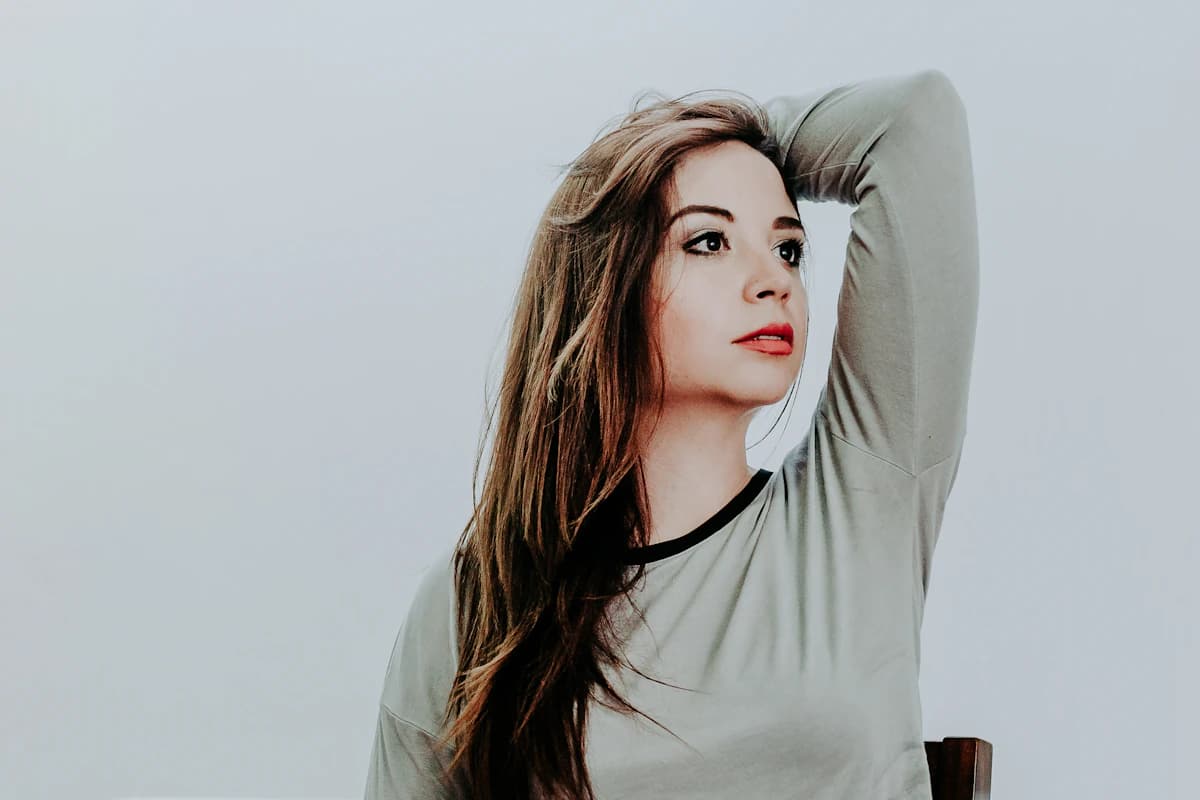
Models are selected for bone structure that photographs well, not for conventional prettiness — and the two are less related than most people assume. The features that recur in agency boards are high projecting cheekbones, a defined jaw, a compact midface, wide-set eyes, and an oval or angular face shape. But the more useful thing to understand is why those features get picked, because it explains the exception that trips everyone up: editorial casting frequently rewards faces that break these rules.
What the camera actually selects for
A camera flattens three dimensions into two. Structure that projects forward — cheekbones, brow ridge, jaw, chin — survives that flattening by catching light and casting shadow. Structure that doesn't project reads as flat, regardless of how it looks in person.
That single fact explains most of the pattern:
- High, projecting cheekbones. The most consistently selected feature across every market. Zygomatic bones positioned near mid-eye level with lateral and forward projection create the light-plane-and-shadow structure that studio lighting is designed to find.
- A defined jaw with clean neck separation. Gives the lower face an edge rather than a gradient. Matters more for male casting, where wide angular jaws are the archetype.
- A compact midface. The distance from eye line to nose base, relative to total face length. Shorter reads as youthful and photographs versatile; longer is a common reason a technically pretty face doesn't book.
- Wide-set eyes with visible lid space. Interocular distance near or slightly above one eye-width. Editorial casting in particular favours eyes set wider than the population average — it reads as striking on camera.
- Even facial thirds. Hairline to brow, brow to nose base, nose base to chin, roughly equal. Balanced thirds mean a face works from many angles rather than one flattering one.
- Skin texture that holds up close. Beauty and cosmetics work is shot at a distance that shows everything. This is condition, not bone, and it is genuinely trainable.
Face shape, specifically
Oval is the most commonly cited "model" face shape, and there's a practical reason rather than an aesthetic one: an oval face is versatile. It photographs well under varied lighting and styling, which makes a model bookable across more jobs.
Diamond and heart shapes — wide cheekbones tapering to a narrower chin — are heavily represented in editorial and runway boards because the cheekbone prominence that defines them is exactly the structure the camera rewards.
Square faces dominate male modeling, where jaw width is a primary selected trait, and appear regularly in strong female editorial casting too.
Round and oblong faces are less represented in high-fashion boards, and constantly cast in commercial, lifestyle and beauty work — which is the larger share of the paid market. Our face shape guide walks through identifying your own.
The exception that matters most
Here is where the checklist above becomes misleading if you stop reading.
High-fashion and editorial casting frequently select faces that break proportion rules in a specific, memorable way — an unusually long midface, very wide-set eyes, a prominent nose, a gap between the front teeth, heavy brows. Some of the most successful editorial careers of the last two decades belong to faces that would score moderately on a conventional attractiveness measure.
The reason is commercial. A face that conforms perfectly to the average is versatile and forgettable; art directors need faces the audience remembers after the page turns. Agencies describe this as "having a look," and it's the single most-cited quality in scouting that no measurement captures.
So the honest summary is two-tiered: conventional proportional balance gets you considered for commercial and catalogue work, which is where most of the money is. Distinctiveness gets you booked editorially. Chasing the checklist while sanding off whatever is unusual about your face optimises for the wrong one.
What isn't on the list
Worth naming, because these dominate the conversation and matter less than people think.
Symmetry correlates with rated attractiveness, but weakly — and perfectly symmetric composites are frequently rated less attractive than the originals they were built from. Casting directors routinely describe asymmetry as what makes a face memorable.
Canthal tilt is measured in millimetres and discussed as though it were destiny. The real-world difference between "positive" and "negative" is typically 2–4 degrees.
Height and measurements are a separate gate entirely from your face, and for runway they're often the binding constraint regardless of bone structure. Our guide to how to become a model covers the requirements by category.
See how your own features score
If you're wondering could I be a model, the scan measures cheekbone projection, jaw definition, facial thirds, eye spacing and 10 other categories from one photo, with a percentile for each — so you can see which features are actually distinctive rather than guessing. In your browser, in a few seconds. The scan is free with no signup; the full per-category breakdown is Pro at $2/month.
One caveat we'd rather state than bury: a score measures how closely one photograph matches patterns in modeling imagery. It doesn't measure beauty, and an industry whose conventions have historically been narrow is not a neutral reference set. We document that on our methodology page.