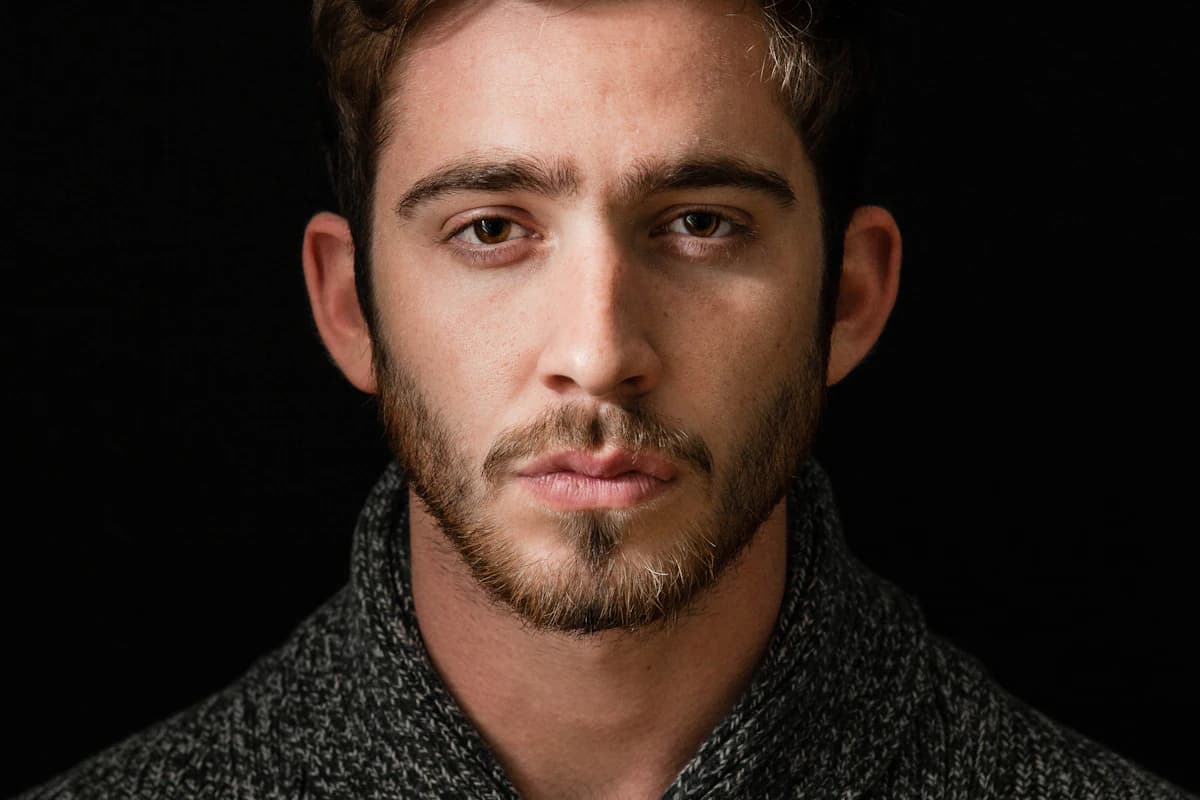
Modeling looks like a closed world from the outside, but the path in is more mechanical than people think: know your category, meet its requirements, get clean photos to the right agencies, and repeat. Here's the honest version of each step.
Step 1: Know the categories — requirements differ wildly
Fashion/editorial is the strictest: most agencies want women roughly 5'9"–6'0" and men 6'0"–6'3", ages 16–22 at signing. Commercial modeling — catalogs, ads, e-commerce — is far more open: any height, any age, because brands need faces their customers relate to. Fitness, parts, petite, plus-size and influencer/UGC modeling each have their own norms, and the industry has widened its range considerably over the past decade.
If you don't meet fashion's height bar, you haven't failed — you're just in a different category than you assumed.
Step 2: Understand what agencies look for in a face
Scouts consistently mention the same things: facial symmetry, defined bone structure (cheekbones, jawline), clear skin, memorable eyes, and above all photogenicity — a face that the camera loves even if it's unconventional in person. "Interesting" beats "pretty" in editorial work; distinctive features that would be flaws elsewhere often become a model's signature.
This is measurable. Before spending money on photoshoots, you can take a free modeling potential test that scores the same feature set — symmetry, jawline, eye impact, photogenicity — across 14 categories and shows your percentile. A strong result doesn't guarantee a contract, but it tells you whether your face is objectively in the conversation.
Step 3: Get digitals, not a portfolio
New faces don't need professional portfolios — agencies actively distrust them. What they want are digitals (also called polaroids): unedited phone photos in plain clothes against a plain wall. Front face, profile, smile, full body front, full body side. Natural light, no makeup or minimal makeup, no filters. Ever. We've written a full shot-by-shot walkthrough in our modeling digitals guide.
Step 4: Submit to agencies the right way
Every legitimate agency has an "open call" or "become a model" page — submit your digitals, measurements, and location there. Rules that protect you: legitimate agencies never charge you to sign (they take commission from work they book, typically 20%); anyone demanding upfront "portfolio fees" or "registration fees" is running the industry's oldest scam. Submit widely — rejection is statistical, not personal, and scouts at different agencies want different looks.
Step 5: Build proof while you wait
Test shoots with photographers building their own books (arranged as free trades), a clean Instagram that shows your face and full body without heavy editing, and local work — boutiques, student films, lookbooks — all compound. Agencies sign momentum as much as bone structure.
The reality check
Even strong candidates hear "no" dozens of times, and most working models earn modest, irregular income for years. Go in because you want to try, not because you need it to work. But if your face scores well, you're photogenic, and you can handle rejection with a straight back — the entry cost is a set of phone photos. There's rarely been a cheaper lottery ticket.
First step, before anything else: find out where you actually stand. Our free could I be a model test scores 14 features from one photo with no signup, and a free account shows your percentile ranking.