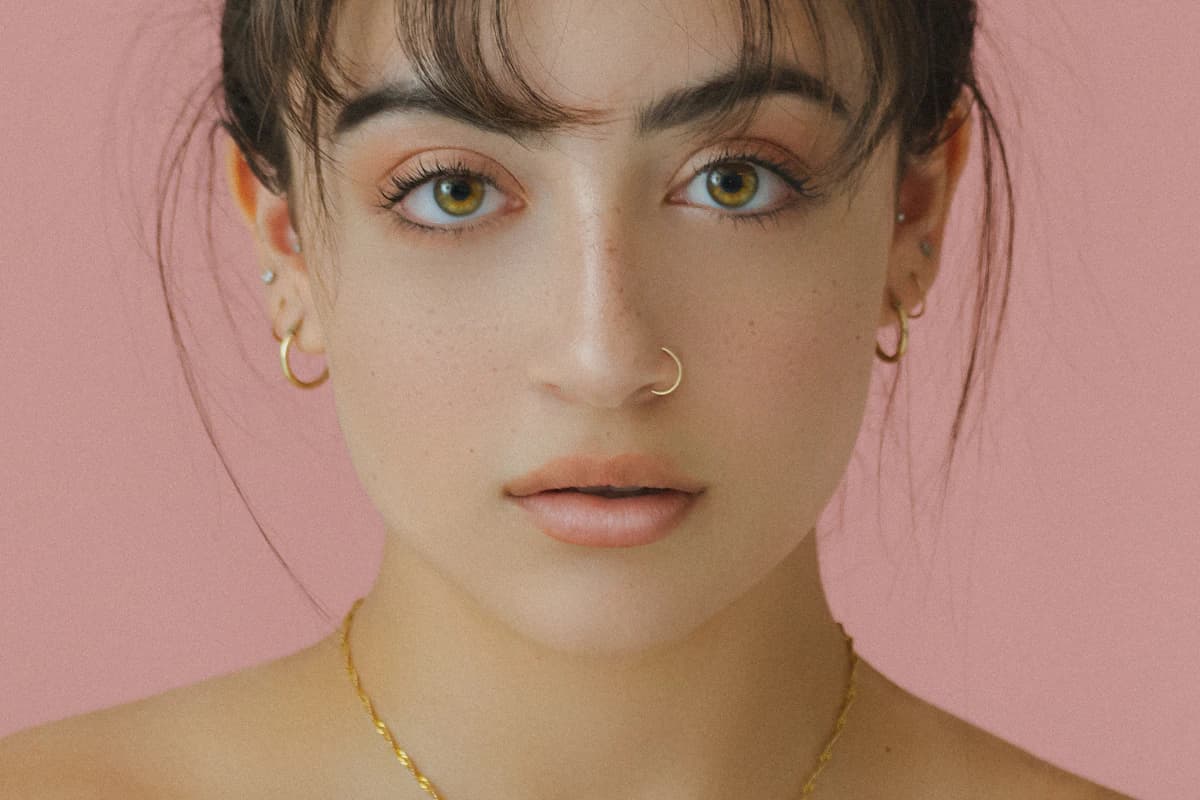
Your face shape is set by three things: the widest point of your face, the length-to-width ratio, and the angle of your jaw. Pull your hair back, look straight into your phone's front camera, and compare — the seven standard shapes below cover virtually every face.
The 7 face shapes, in one pass
Oval — length noticeably greater than width, forehead slightly wider than the jaw, soft rounded jawline. The "default" shape most guides treat as the reference point. Round — length and width nearly equal, full cheeks, soft jaw, widest at the cheeks. Square — length and width close, but with a wide, angular jaw nearly as wide as the forehead; strong gonial angles. Heart — wide forehead and cheekbones tapering to a narrow, sometimes pointed chin; often paired with a widow's peak. Diamond — widest at the cheekbones with a narrow forehead and narrow chin; the rarest shape. Oblong (rectangle) — clearly longer than wide like oval, but with straighter sides and a squarer jaw. Triangle (pear) — jaw wider than the cheekbones and forehead.
How to measure yours in 60 seconds
Take four rough measurements (a phone screenshot and any ruler app works): forehead width at its widest, cheekbone width across the highest points, jaw width across the corners, and face length hairline-to-chin. Then: length clearly greater than width → oval or oblong (jaw angle decides). Width ≈ length → round or square (jaw angle decides). Widest at cheekbones with narrow chin → heart (wide forehead) or diamond (narrow forehead). Widest at jaw → triangle. If you land between two shapes, you're a blend — most faces are, and the label matters far less than the proportions behind it.
Is there a "best" face shape?
Surveys and casting patterns show oval reads as the most universally "balanced" because it matches the average proportions our brains treat as a template — but every shape has model examples: square jaws dominate male editorial work, heart and diamond shapes are prized in beauty campaigns, and round faces photograph youthful, which commercial clients actively want. Shape determines how you're cast more than whether you're castable. What matters more measurably is symmetry and proportion within whatever shape you have.
Why face shape matters for photos
Shape dictates your best angles: square and oblong faces gain softness from slight three-quarter turns, round faces gain definition from elevated camera angles, heart shapes photograph best straight-on where the taper reads as balance. It also drives haircut and beard choices — the classic rule is to counterbalance (add width to long faces, length to round ones) rather than amplify. This is the practical use of knowing your shape: it's a lighting-and-angles cheat sheet, as we cover in what makes a face photogenic.
Skip the ruler — measure it with AI
Eyeballing your own proportions is the least reliable way to do this. An AI scan maps 50+ landmarks and measures the exact widths and ratios above, then scores 14 features from bone structure to jaw definition. Take the free model potential face test — upload one photo, get your proportions scored with a percentile, no signup.