The maxilla is your upper jaw bone, and "forward growth" describes how far it — and the midface built on it — projects forward rather than growing down and back. A more forward-grown maxilla supports fuller cheekbones and a straighter facial profile; a more retruded one produces what looksmaxxing forums call a "flat" or "recessed" midface. The anatomy behind the term is real. What the internet claims you can do about it as an adult mostly isn't.
What the maxilla actually is
The maxilla is the bone that forms your upper jaw, the floor of your nose, and much of the structure beneath your cheeks. Its position in three dimensions — how far forward it sits, how wide it is, how it relates to your lower jaw — shapes a large part of what people read as midface structure: cheekbone support, the straightness of your profile, and how your nose and upper lip project.
"Forward growth" isn't a single measurement so much as a description of a growth pattern. During childhood and adolescence, the face grows in a direction — some people's midface bones grow predominantly forward and down in a balanced way, producing a well-supported midface at adulthood; others grow with more vertical rotation and less forward projection, producing a flatter, longer-looking midface. Clinically, this is assessed with cephalometric analysis — angles and distances measured from an X-ray using fixed landmarks — not by eye.
"Good maxilla" vs "recessed maxilla," in plain terms
Online, a forward-grown or "good" maxilla gets described as full cheekbone support, a straight-to-slightly-convex profile, and a midface that doesn't look sunken relative to the forehead and chin.
A recessed or retrognathic maxilla describes the opposite: a flatter midface, cheekbones that read as less supported, and sometimes a profile where the lower face projects further forward than the upper face. Orthodontic literature associates this pattern with maxillary hypoplasia or retrognathism — real, diagnosable conditions, distinct from the milder cosmetic variation most people asking about this actually have.
Worth saying directly: most faces asking "is my maxilla recessed" sit somewhere in an ordinary range. True clinical maxillary retrognathism is a specific diagnosis a maxillofacial specialist makes from imaging, not a verdict a mirror or a TikTok filter can hand out.
How it's actually assessed
Properly, this requires imaging — a lateral cephalogram and defined skeletal landmarks. That's not available to you from a phone photo, and no app measures actual bone position from a 2D image, whatever it might claim.
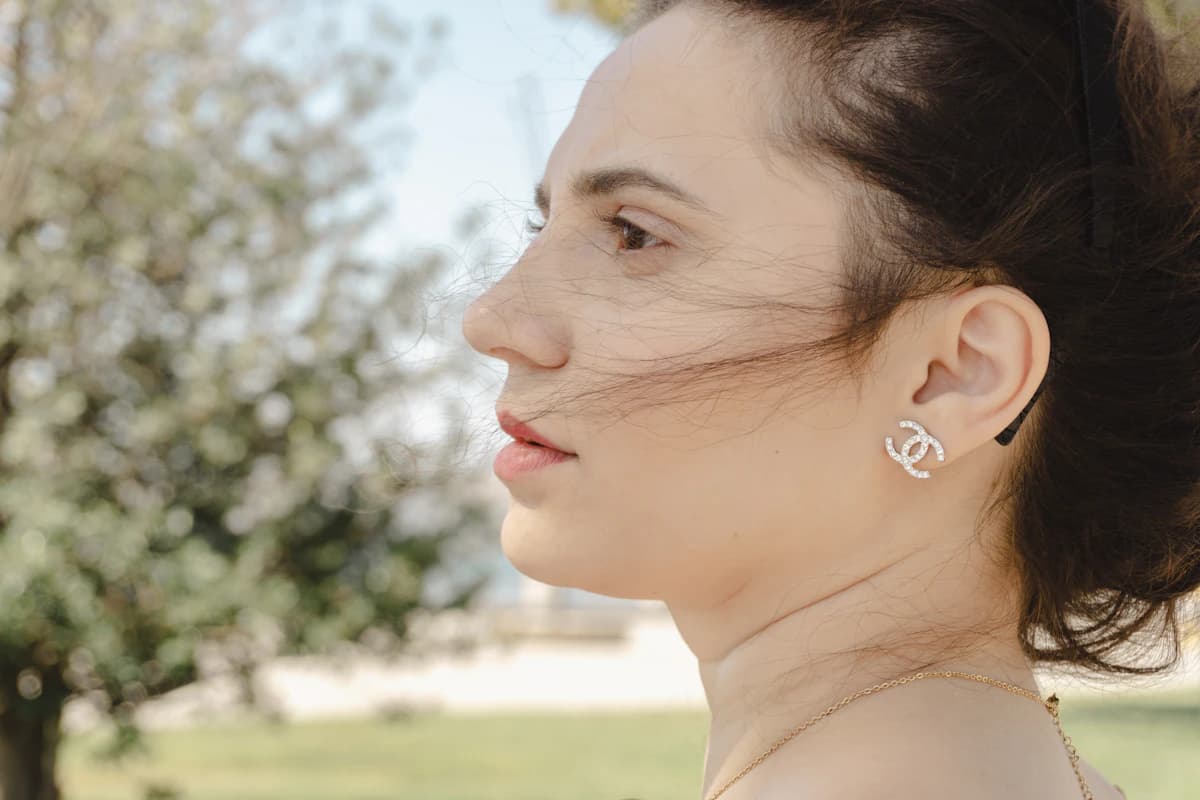
What you can reasonably look at in a photo is midface projection as it presents in soft tissue — the profile view. Photograph yourself in strict profile, camera at eye level, even light, neutral expression. A midface that sits roughly in line with (or slightly ahead of) an imaginary vertical line from the forehead reads as well-projected. A midface that sits noticeably behind that line, with the chin or lips projecting further forward by comparison, is the soft-tissue signal people are usually describing as "recessed."
This is a rough visual read, not a diagnosis — and like every other facial measurement on this site, it moves with camera angle. A slight downward camera tilt alone can make a normal midface look recessed.
What mewing claims, and what the evidence actually shows
This is where the trend runs well ahead of the science, and it's worth being direct about it.
Mewing — resting the tongue against the roof of the mouth — is promoted in looksmaxxing communities as a technique that reshapes the maxilla forward in adults through sustained pressure. There is no controlled clinical evidence supporting adult bone remodeling from tongue posture. Facial bone, once an adult growth plate has fused, does not respond to tongue pressure the way orthodontic literature describes childhood growth responding to a period of active development.
Where there is legitimate evidence is narrower and specific to children: orthodontic interventions like palatal expansion or "orthotropics"-style approaches, applied by a qualified orthodontist during an active growth window, can influence how the maxilla develops. That is supervised medical treatment during childhood, not a self-directed adult exercise — and the evidence base for the more aggressive versions of these claims remains contested even within orthodontics.
For adults, maxillary position is close to fixed. The two evidence-based paths to actually changing it are orthognathic (jaw) surgery — a serious maxillofacial procedure with real recovery and real risk, appropriate for diagnosed skeletal discrepancies — or accepting it as a fixed structural trait, the way you would height.
What genuinely changes how it looks in photos
Separate from bone position entirely, several things move how "forward" your midface reads on camera:
- Camera angle. A slightly upward angle projects the midface; a downward angle recedes it. This single variable moves the perceived effect more than anything on this list.
- Body fat. Facial fat distribution sits over the underlying bone. Leaner faces reveal more of the existing cheekbone and midface structure either way.
- Lighting. Directional light from the front-side catches cheekbone projection; flat light flattens it regardless of the bone underneath.
- Posture. Forward head posture changes the visible relationship between jaw, midface and neck in profile shots.
None of these change the maxilla. They change what a camera shows you of a maxilla that hasn't moved.
Where this fits in an actual score
Our scan doesn't attempt to diagnose skeletal position — that needs imaging a photo can't provide. What it does measure, as part of the cheekbone and facial-proportion scoring, is exactly the soft-tissue signal above: cheekbone projection, midface balance relative to the rest of the face, and how the thirds of your face relate to each other, covered in more depth in our facial harmony guide.
If a term like this is turning into hours spent studying your own profile, that's worth noticing. The looksmaxxing spaces that popularized "forward growth" are the same ones behind canthal tilt and the PSL scale, and they carry a documented association with appearance-related distress. A bone you were born with isn't a problem to solve by staring at it longer.
Check your own proportions
Our free face scan scores cheekbone projection and facial proportions as two of 14 categories from a single photo, in a few seconds. The scan is free with no signup; the full per-category breakdown is Pro at $2/month. It reads what a photograph shows — not the bone underneath it, and not a verdict on you.